
Turning Toward

John Gottman is probably the foremost psychological researcher on marriage. His work is brilliant and academic, but yet he has managed to write books for the regular married folks. He has a quick little read called The Seven Principles for Making Marriage Work. While this isn’t a Christian book, it has vast applications to Christan marriage.7 principles
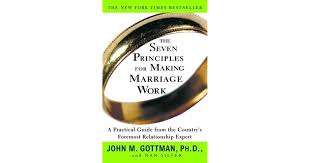
While all 7 principles in the book are necessary, there is one in particular that I find to be both critical to our marriage, but also extremely difficult.

Turn toward each other instead of away

It is stated so simply, yet I find this principle to be the most difficult of all marriage skills. When I’m angry or disappointed or hurt, everything in me wants to run away from my husband. I want to hide my hurt. I want to shut down. I want to ease the pain with a glass of wine. Escape is my temptation. Sometimes I physically roll away from his side of the bed. Sometimes I pretend I just can’t fall asleep without a mug of tea, so I can escape downstairs.

Somehow, I find a way to turn away from him.

In these moments, I believe I deserve to be pursued. Apologized to. He should admit that I’m right after all. I shouldn’t have to turn toward him. He should turn toward me, and maybe even chase me a bit. So I turn away.

But never once have these type of escape methods lead to a healthy resolution of whatever type of disagreement/hurt/pain we are struggling with. Not once.

But if I turn toward him, without anger or accusations, we can usually find a common ground. Sometimes that common ground is simply an affirmation of our love for each other. Sometimes there is resolution of the issue at hand, but usually not right away. Because typically the fight isn’t about the fight. Usually one of us has felt disrespected or hurt or unprioritized or unwanted, and that’s really the problem that we’re having.

I really hate the humility it takes to turn towards. It isn’t my nature to relinquish my rights. The hurt can feel so big, and it is. But the issue usually isn’t, because it‘s not the issue at all. What I need is to feel respected, loved, prioritized, and wanted. And so does he. This type of love is a dynamic, life-long pursuit.

And the only way to begin that pursuit is to stop turning away from each other, and turn toward. It took an expert psychologist to figure out that a relationship requires that we not run away from each other when we’re in pain. It seems pretty obvious, but in the moment it takes all the strength and trust you can muster. Let’s gather our courage and Turn Towards our spouses. These are the only types of marriages that are real.


A Laughing Matter

In 2009 we added a newborn to our family, giving us a 4 year old, a 2 year old and a newborn. I didn’t sleep much. And I don’t remember much. But I do remember giving out a lot of snacks, and I remember washing the tray of the high chair with one arm while holding a screaming baby in the other arm. And diapers. I remember so many diapers. (I never once got one child potty trained before the next baby was born). I remember waking up “in the middle of the night” to feed the baby and finally getting him back to sleep, and I’d quietly tiptoe out of the room and sooooo-slowly creak the door closed… only to be met in the hallway by a hungry 2-year old ready for breakfast at 5:13am. The days seemed so long (they actually were, since they started at 4:30am), and sometimes the bedtime routine of 3 kids under 5 was more than enough to push me into insanity. Needless to say, by the time all of the kids were in their beds, Brent and I didn’t have a lot of energy for emotional or physical intimacy in those days.

That began the only phase in our marriage where we had a regularly scheduled date night. Every Tuesday night a babysittter came to our house from 6:00-9:00pm. This was as much about dodging the bedtime routine 1 out of every 7 nights as it was about tending to our marriage. Life was just so.much.work.

I am not kidding. We were so tired. In addition to the 3 VERY small children, Brent was having a very intense time at work, and was working late hours and coming home very tired. We scheduled date night for Tuesdays because it was nearly impossible for us to get through the 5 workdays without a break. So, date night was never a very exotic event. It wasn’t about doing something fancy. It was just time away together.

Almost every week, you could find Brent and Heidi at La Hacienda Mexican Restaurant in Fayetteville drinking margaritas and eating chips and salsa. Our conversation wasn’t deep and spiritual. We didn’t hash out conflicts. You know what our marriage needed? We needed to laugh together. Home life was so rich and full and wonderful, but it felt like hours and hours of work. And we worked well together. But we missed having fun together. I missed being the girl who lit him up, and he missed being the guy who made me giggle.

Now that exhausting baby is 9 (and he’s really great). I still look back on that crazy year as one of my favorites because of that laughter at the Mexican restaurant. And lately, we’ve been sorely missing regular date nights. So we’ve made some really difficult choices to eliminate some activities from our family’s schedule, because we are not willing to sacrifice having time to laugh together. It’s been hard to prioritize our “fun” over our kids’ activities. But we needed to.

How often do you and your spouse laugh together? Maybe we should start to see a lack of laughter in our marriages as a warning light that indicates our marriage needs some attention. Is your warning light on? How can you add laughter to your marriage? Let’s prioritze our spouse relationship before it is a crisis.

Do We Let Men Fail?

In Daring Greatly Brené Brown discusses her research about how men feel about shame and sexuality. The horror of reading this chapter is discovering that it is often women have seriously harmed our men with covert messages. We say words to encourage our men to be vulnerable and emotional, but men also hear another message loud and clear. They hear an unspoken message that we want them to be strong and protective, but never fragile. We don’t want them to be emotional and vulnerable about weakness; only their strengths. Women love it when men are emotional about their feelings of love and gratitude and generosity and puppies and babies. But how do women react when our men share a brokenness? A fault? An uncertainty or unconfidence? A failure? Or what about a really really big failure?

Wives: are you a safe place for your husband to admit his failures? How does he feel confiding in you that he isn’t sure he’s going to get the promotion? That he doesn’t know if his work matters? That he looked at pornography? That he cheated on the basketball court? That he lied to a friend, or resisted the urge to be generous to a person in need? That he worked all weekend to fix the car, but ultimately failed and now the repair will cost twice as much? Do you really want to hear about it? Can you receive his truth, and simultaneously validate his worth and competence, as well as your love for him?

Here is a quote from a man, quoted in chapter 3 of Daring Greatly, by Brené Brown.

My wife and daughters… they’d rather see me die on top of my white horse than watch me fall off. You say you want us to be vulnerable and real, but c’mon. You can’t stand it. It makes you sick to see us like that.

Later in the chapter, Brené writes:

We ask them [men] to be vulnerable, we beg them to let us in, and we plead with them to tell us when they’re afraid, but the truth is that most women can’t stomach it. In those moments when real vulnerability happens in men, most of us recoil with fear and that fear manifests as everything from disappointment to disgust. And men are very smart. They know the risks, and they see the look in our eyes when we’re thinking, C’mon! Pull it together. Man up. As Joe Reynolds, one of my mentors and the dean at our church, once told me during a conversation about men, shame, and vulnerability, “Men know what women really want. They want us to pretend to be vulnerable. We get really good at pretending.”

Ladies, this is so tough. It’s awful to be shown a reflection of ourselves and be disgusted by it. But we know it’s true. We need to offer our men a more unconditional love. They need our love and acceptance when they are weak and when they fail, not just when they are doing great things. Because who needs a conditional love? To love men well, we need to be the ones cheering for their inner worth and strength and dignity, even when their actions are failures or weaknesses. We are the ones who shout I see the real you. You are strong and worthy and loved. You are worthy of my love, not because of what you do but because of who you are. 

**Caveat: This doesn’t apply to abusive men. We don’t offer unconditional acceptance to abusive people.