I’m Not Sure How to Pray

More and more often I don’t go to prayer to ask for healing, blessing, or intercession. More and more often I’m going to prayer to hear from God. To hear his affirmations of his love for me, or to hear a specific message, or to get clarity on his direction on a decision. And even more so, more and more often I just want to sit with Jesus and feel his closeness. I care less and less about prayer requests. Not that I don’t pray for my loved ones, but I am less and less sure that I have any idea of how a particular situation should unfold, and I’m not in relationship with God for the benefit it brings me. Rather, I’m just wanting to be in connection with Him. More and more I’m surrendering to God’s ways, and wondering how I can help others surrender and find comfort in that surrender. 

Of course, when someone close to my heart is struggling, I still beg God to make their way easier. But I’m learning that what I want for myself or another may not be God’s best. And I certainly don’t want to be asking for God to give anything less than his best. So I struggle with prayer requests and intercession. Because Im just not sure what to ask for. And I know that the Bible is clear that we can intercede on behalf of another and that God honors our repeated requests. But I’m starting to see that my prayers for people are much more focused on spiritual growth than praying for specific circumstances. 

I just don’t know if God wants you to have the job you’re interviewing for. I just don’t know if it’s best for your grandmother to be able to stay in her home instead of going to Assisted Living. I don’t know if your child passing 2nd grade is the best thing, or if him repeating a grade is part of God’s mysterious plan for him. I’d really like you to have a safe trip and strong relationships with your in-laws, but I don’t really know how that should come about. I truly hate that you’re sick, and I’m so glad that we’ll all be healthy in heaven, and I know that Jesus loved to heal, but I also know that sometimes God allows suffering, and works through our pain, and it’s all pretty confusing to me, and I’m going to trust that God knows better than I do. I am pretty sure that God wants you to be patient and loving, and I’m sure that being close to God will give you peace. So I tend to pray those things. Whatever your circumstances are, I want you to be walking with Christ; with His spirit within you and His love shining through you. That’s my desire for you. The rest I’m not so sure about. But I know that wholehearted living comes from being intimate and honest with God and people, and that you are loved beyond what you can imagine and that gives you worth. And the depths of my heart wants you to lean into that love. 

And when my 6-week old baby was in the Emergency Room at the Children’s Hospital struggling to breath, I knew that probably everyone assumed we were soliciting God for his life. And I knew others were praying for his health. But Brent and I both had a strong sense that asking God to spare his life was not what the Spirit was leading us to do. And honestly? Neither of us prayed for God to give us our baby back. Without talking to each other, Brent and I both had experiences of surrendering our Baby to God. Neither of us were sure that his survival was God’s will. And each of us told God that was ok, and we both felt pretty nauseaus. Brent faced the story of Abraham’s willingness to sacrifice Isaac, and he was quite sure that God was asking him to have the same willingness. And I could see, almost like a vision, the veil of death and felt the strong reality that death isn’t final and our baby dying was not the end of his existence, and him being on the other side of that veil wasn’t really so terrible. I also told God that I would surrender my child if God asked that of me.

Looking back on it, it seems strange but also not. We were asked to surrender instead of petition. Don’t get me wrong, I am so very grateful that our baby is now a flourishing 7-year old. But there was a moment in that ER where it was quite clear to me that he isn’t mine.

I don’t know what to pray for, but I do know how to pray. Your will be done. Your kingdom come, on earth as it is in heaven. For sure, I don’t hardly ever know what God’s will is, and I certainly don’t know what God’s kingdom looks like or how to make it “come” to earth. But I know what it feels like to surrender to God. And when I get a chance to come alongside God’s Spirit bringing the Kingdom to earth, I want to join in. So those are my prayers. Surrender. Love. Give. Do what God is doing. 

Turning Toward

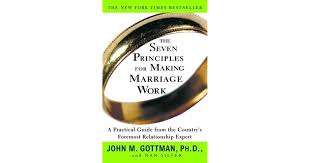
John Gottman is probably the foremost psychological researcher on marriage. His work is brilliant and academic, but yet he has managed to write books for the regular married folks. He has a quick little read called The Seven Principles for Making Marriage Work. While this isn’t a Christian book, it has vast applications to Christan marriage.7 principles

While all 7 principles in the book are necessary, there is one in particular that I find to be both critical to our marriage, but also extremely difficult.

Turn toward each other instead of away

It is stated so simply, yet I find this principle to be the most difficult of all marriage skills. When I’m angry or disappointed or hurt, everything in me wants to run away from my husband. I want to hide my hurt. I want to shut down. I want to ease the pain with a glass of wine. Escape is my temptation. Sometimes I physically roll away from his side of the bed. Sometimes I pretend I just can’t fall asleep without a mug of tea, so I can escape downstairs.

Somehow, I find a way to turn away from him.

In these moments, I believe I deserve to be pursued. Apologized to. He should admit that I’m right after all. I shouldn’t have to turn toward him. He should turn toward me, and maybe even chase me a bit. So I turn away.

But never once have these type of escape methods lead to a healthy resolution of whatever type of disagreement/hurt/pain we are struggling with. Not once.

But if I turn toward him, without anger or accusations, we can usually find a common ground. Sometimes that common ground is simply an affirmation of our love for each other. Sometimes there is resolution of the issue at hand, but usually not right away. Because typically the fight isn’t about the fight. Usually one of us has felt disrespected or hurt or unprioritized or unwanted, and that’s really the problem that we’re having.

I really hate the humility it takes to turn towards. It isn’t my nature to relinquish my rights. The hurt can feel so big, and it is. But the issue usually isn’t, because it‘s not the issue at all. What I need is to feel respected, loved, prioritized, and wanted. And so does he. This type of love is a dynamic, life-long pursuit.

And the only way to begin that pursuit is to stop turning away from each other, and turn toward. It took an expert psychologist to figure out that a relationship requires that we not run away from each other when we’re in pain. It seems pretty obvious, but in the moment it takes all the strength and trust you can muster. Let’s gather our courage and Turn Towards our spouses. These are the only types of marriages that are real.

Annoying Kids? Or Depleted Mom?

Some days the kids just seem so extra super annoying. Am I right? What is wrong with them? Did they have too much sugar or caffine? Not sleep enough? Did they secretly band together to ruin my day?

I suppose it’s possible, but after a few years of having these supremely awful days every so often, I had a realization. My kids are actually not really any more or less annoying on any given day. The only thing that really changes in this equation is me.  What changes is that my attitude and ability to offer patience and love diminishes on some days.  It took me a while to realize what was different about these awful days. And it wasn’t the kids. The bad days are the days that I’m depleted. I’ve neglected caring for my own needs. I’m left lacking in every single Fruit of the Spirit. I’m not loving, joyful, peaceful, patient, kind, good, fathful, gentle, or full of self-control. That equates to a cranky Mommy.  If the kids seem extra intolerable, it is far more likely that I haven’t slept well, or I have some unmet emotional/spiritual/physical needs that I haven’t cared for.

In fact, I now use my kids’ annoying-ness as more of a barometer of my own self-care. If the kids are really bugging me, I know it’s time to look at myself. What unmet needs are pulling me down? Do I need some alone time? Prayer? A date night? A cry? Am I hungry? Do I need an early bedtime? Do I need help with housework? Time in nature? Or do I need deper self-care, like therapy, spiritual direction, or intercessory prayer? Or perhaps I need a major life change?

In general, I’ve started to treat myself like a toddler. If I have no patience for a schedule change, or I am crying over little things, or I am throwing a temper tantrum…. I probably need snuggles or food or alone time or sleep. #toddlerlife.  Or I need therapy, prayer, or some life coaching.

But of course, sometimes the kids really do have a bad day. It happens. They have needs too. The child in question probably needs a nap, or perhaps a snack. They need you. So make sure you’re ready.

Do We Let Men Fail?

In Daring Greatly Brené Brown discusses her research about how men feel about shame and sexuality. The horror of reading this chapter is discovering that it is often women have seriously harmed our men with covert messages. We say words to encourage our men to be vulnerable and emotional, but men also hear another message loud and clear. They hear an unspoken message that we want them to be strong and protective, but never fragile. We don’t want them to be emotional and vulnerable about weakness; only their strengths. Women love it when men are emotional about their feelings of love and gratitude and generosity and puppies and babies. But how do women react when our men share a brokenness? A fault? An uncertainty or unconfidence? A failure? Or what about a really really big failure?

Wives: are you a safe place for your husband to admit his failures? How does he feel confiding in you that he isn’t sure he’s going to get the promotion? That he doesn’t know if his work matters? That he looked at pornography? That he cheated on the basketball court? That he lied to a friend, or resisted the urge to be generous to a person in need? That he worked all weekend to fix the car, but ultimately failed and now the repair will cost twice as much? Do you really want to hear about it? Can you receive his truth, and simultaneously validate his worth and competence, as well as your love for him?

Here is a quote from a man, quoted in chapter 3 of Daring Greatly, by Brené Brown.

My wife and daughters… they’d rather see me die on top of my white horse than watch me fall off. You say you want us to be vulnerable and real, but c’mon. You can’t stand it. It makes you sick to see us like that.

Later in the chapter, Brené writes:

We ask them [men] to be vulnerable, we beg them to let us in, and we plead with them to tell us when they’re afraid, but the truth is that most women can’t stomach it. In those moments when real vulnerability happens in men, most of us recoil with fear and that fear manifests as everything from disappointment to disgust. And men are very smart. They know the risks, and they see the look in our eyes when we’re thinking, C’mon! Pull it together. Man up. As Joe Reynolds, one of my mentors and the dean at our church, once told me during a conversation about men, shame, and vulnerability, “Men know what women really want. They want us to pretend to be vulnerable. We get really good at pretending.”

Ladies, this is so tough. It’s awful to be shown a reflection of ourselves and be disgusted by it. But we know it’s true. We need to offer our men a more unconditional love. They need our love and acceptance when they are weak and when they fail, not just when they are doing great things. Because who needs a conditional love? To love men well, we need to be the ones cheering for their inner worth and strength and dignity, even when their actions are failures or weaknesses. We are the ones who shout I see the real you. You are strong and worthy and loved. You are worthy of my love, not because of what you do but because of who you are. 

**Caveat: This doesn’t apply to abusive men. We don’t offer unconditional acceptance to abusive people.

Christian Parenting: More than a handout

When you’ve worked in Children’s Ministry for all of about 3 minutes, you start to wonder How can we encourage parents to influence their children’s spirituality? From my experience it seems pretty clear that the traditional method of giving parents some sort of written resource to use at home is not the assistance parents are craving. Whether it is a take-home review sheet, a family devotion, a magazine, a website or book, it is just not very helpful or useful.

Some families use a resource at home, but I find that they typically like to select their own resources. But that’s not really the issue. Because really we’ve inadvertently veered off course from the original question. We asked How can we encourage parents to influence their children’s spirituality? And then we start looking for fabulous book-type resources that we can recommend. We’re making an assumption that a resource can equate to influence. And that’s flawed thinking.

But here’s the deal:

Parents already are the primary spiritual influence of their children’s faith development, whether or not they accept that role.

Think about it. When you consider what your early perceptions of God are, you immediately start to think about the messages you were taught from your parents and the role they played in your life. The truth is, you start to think about what type of person your mom or dad was. Did they teach you that you had to earn approval and love through working hard or succeeding academically? Did they seem to never have time for you? Were they quick to forgive, or did they write shame messages about your identity? Did they struggle with an addiction and put you in a caretaking role? Were you victimized and left feeling unsafe? Did you feel protected and cared for? Did you learn that keeping the peace was what was needed of you? Did you feel safe and nurtured? These messages quickly turn into our views of God, and rewriting them is part of our spiritual growth.

So now, it’s our turn. We are the parents. And we can read our kids a devotional and take them to church (and that’s great), but the true impact of our parenting is going to be How Jesus has transformed our lives. Because our kids see more clearly than probably anyone what our character is, how we deal with our flaws and how we are loving the world around us. The best thing we can do for our kids is to let them see that Jesus is working in us to make us more loving, more generous, more forgiving and more patient. Our kids need to see that we are pursuing Him. That we fail sometimes, and in our failure we turn toward God, not away. Let your kids see that you are striving after Jesus and figuring out how to love people. Talk about these things “when you sit at home and when you walk along the road, when you lie down and when you get up. Tie them as symbols on your hands and bind them on your foreheads. Write them on the doorframes of your houses and on your gates.” (Deut 6:7-9). This is so much harder than reading a couple paragraphs to your kids. This will take courage and vulnerability and time and energy.

I’m not saying that resources aren’t a great thing. And I hope you’re reading scripture with your children. But don’t forget that your kids need to see “Christ in you, the hope of glory.” (Col. 1:27) This hope is what they crave, and seeing Christ in you, will make Jesus something they trust and crave.

The Motherhood Lie

The basics of parenting are somewhat easy to figure out. You should feed and clothe your kids. You should provide a home for them. You should love them. When they are infants it is so very difficult because #nosleep and #hormones, but it is mostly clear what Baby needs. It is an exhausting and difficult season. And if you’re there, let me know because I will bring you a casserole and hold Baby so you can take a shower.

But the worst part isn’t the lack of sleep or the hormones, it’s that there’s this lie gurgling in your gut. Most moms hear this lie within days of becoming a parent, if not earlier. The lie whispers “You aren’t enough.” Soon enough this lie grows louder and louder until it is deafening. Listening to it may very well be the hardest part of Motherhood. It’s easy to let the lie become overwhelming. 

The lie has many voices. I can’t do this. All the bad in me will damage my child. Not good enough, not capable enough, not patient enough, not organized enough, not skinny enough, not beautiful enough, not smart enough, not accomplished enough, not old enough, not young enough, not creative enough. Not giving enough. I AM NOT ENOUGH

We think we aren’t enough because our kid will only eat white foods. Or because our kid stole a toy. Because breastfeeding was difficult or impossible. We aren’t enough because we work (or because we stay home). We aren’t enough because we can’t keep the house perfectly tidy. We aren’t enough because we can’t shed the last 10/20/30/more pounds from the pregnancy. We aren’t enough because our 3 year old doesn’t like to go to church. We aren’t enough because our kid came home with a note from the teacher. Or because our kid didn’t get into the gifted program. We aren’t enough because we can’t afford ballet lessons. We aren’t enough because…

Take a deep breath, Moms. 

God gave me a little gift before I became a mother. It’s a bit unique, so I’m going to share it with you. Before I had kids of my own, I worked as a Social Worker in a group home for foster children. I saw almost every sad situation you can imagine. Sexual abuse. Parents who choose drugs over their children’s welfare. Physical Abuse. Abandonment. Neglect. Every story was sacred in its own way. Every child coped with the pain in different ways. It was hard to be close to this pain. It was hard to hear these stories. These kids deserved so much more. It was an emotionally exhausting job with little appreciation. But it was one of the greatest gifts to my parenting journey. 

You see, when I hear the lie speak to me that “I am not enough” I think back to those children. When I hear the lie in my heart, I remind myself that those kids in foster care deserved a parent like me. That’s not me bragging. It’s just acknowledging that those children deserved a basic level of imperfect love and care, and I am more than able to provide “good-enough” parenting.  I’m not perfect, and my kids might end up in therapy to process me. But I’m enough. My mothering would be enough to give each of those foster children what they needed. Each of those kids deserved a mom who was willing to make sacrifices, was able to manage her past traumas without drugs, who didn’t gain control through violence or sex. A mom who cared for their basic needs of food, shelter and snuggles. A mom who shows up. 

To be clear, I’m no better than the moms whose children are in foster care. No mother chooses to not care well for her children. It is our basic desire. These moms are victims of the lie, too. These moms could be enough. Moms who have lost their children to the foster system are in their own suffering. They need our help. Please don’t ignore them, and certainly don’t hate them.

But if I’m enough of what those foster kids needed, then I’m enough to be a mom to my own children. I don’t need to believe the lie anymore. Not serving organic carrots, or any carrots, doesn’t make me a bad mom. Not taking my baby to Storytime at the library doesn’t qualify me as a failure. Yelling at my kids might be a mistake, but it doesn’t mean I’m not enough. I rarely know what advice to give my kids. I might not volunteer at the school often and I’m on my phone too much and I run out of energy and I just can’t keep up most days. But I am enough. 

But still I hear the lie most days. Especially when one of my children has a failure, another mom criticizes me or I’m fighting with my husband. But I’ve learned to recognize the lie. I see it coming. I can hear it crouching up behind me. Most of the time I can shoot down the lie before it gets to my heart. Sometimes I need to remind myself that I live in freedom. Some days I need a friend to speak truth over me. But some days I cry because I believe I’m not enough. But you know what? Believing the lie doesn’t make it true. Even when we believe the lie, it doesn’t mean that we aren’t enough. Even that is forgiven.

We aren’t perfect mothers, and we don’t have to be. There is just so.much.grace. Layers and layers and layers of grace. It washes down on us. It washes our hearts and it washes over our families. And that grace is enough.

You’re doing great, Moms. 

What is the Goal of Parenting?

What is the goal of parenting? This topic is so tricky. And scary. And controversial perhaps. But I’ve decided that my goal of parenting is not that my kids will follow Christ.

Deep breathes, Everyone.

Why? Well, because it’s really not something I have the power to do. And my kids’ faith decisions are actually not a reflection of the quality of my parenting, or a representation of my faith.

Whew. That’s pretty hard to say.

A good goal is within my control. It’s achievable. And my kids’ faith is not within my control. That’s a hard thing to say, so let’s say it again. Your kids’ faith decisions are not something you can control. I’m tempted to wish I could. But I’m realizing that when I wish I was in control of my kids’ faith decisions, I am ultimately telling God that I don’t believe He’s pursing their hearts and I don’t trust the Spirit to work in their lives, and I think I can do it better than God. 

Oops.

I don’t know everything about parenting, but I do know a few things about God. I know God loves my children and He wants nothing more than to have my children come to Him. He is wooing them. He is pursuing them in perfect ways. He has perfect timing. He is revealing Himself to my children. He has specific plans for them, ways for them to love the people of this world.

So what are my goals of parenting? Well, I’d like to propose that parenting is an act of worship. We love unconditionally, we sacrifice unendingly, and we trust God’s guidance when we feel lost. And even when it’s hard, there is an underlying delight and joy. In all of these ways, we worship. In many ways, parenting is much more about the parent than the child. When I am emotionally and spiritual healthy, then my parenting will be emotionally and spiritually healthy.

The goal of parenting may be worshipping the One who gave us children, but we also have many responsibilities to our children. I won’t presume to have an exhuastive list, but rather a starting point. And let’s assume the basics of food, shelter, discipline and safety have already been provided. But I think we all know that our calling as parents is much greater than the basics.

First, building a lifelong relationship with my child is supremely important, because it is the foundation for any influence I may have. It is the way that our children learn to give and receive love in their futures, either with people or God. When we sacrifice relationship, we sacrifice influence.

I also have a responsiblity to pray for my children. I cannot control their faith decisions, but I can intercede on their behalf. On the Risen Motherhood podcast (ep. 113), Nancy Guthie says:

…we want to be pouring ourselves into begging God to do what only God can do, by the way, which is, take our child from spiritual death to spiritual life. Only he can do that.

Also, I want to give them the skills they need to make a decision about their faith. This includes cognitive knowledge of scripture, theology, and spiritual disciplines. I acknowledge that knowing about God may be necessary, but it is not sufficient for heart change. Something must change within their heart to bring about repentence and surrender, and that doesn’t come from knowledge. That comes from the work of the Spirit and I trust He’s doing it.

My kids need to see what it looks like to live a life of faith. I want to model a vibrant relationship with God, because they’ll see my faith closer than they’ll ever see someone model faith again. My faith has to be real and I want them to see how it changes me and leads me to love the world around me.

And lastly, I want to create space for my kids to be more likely to interact with the Spirit. That’s why we go to church and read the Bible at home. But it’s also why we travel, and get out in nature, and ask for forgiveness, and resolve conflicts, and serve those in need, and welcome others into our home, and talk about world issues. God is in all of this. So we are in all of this.

My goal is to love my kids well. It is my act of worship. The outcome or result of my parenting is out of my control. We need to stop seeing parenting as a success or failure, based on how well our children meet our expectations. Parenting is a success when we love God well and love our children well. Love God; Love people- just as Jesus asked us to.